
Kati Patang Revitalizes Himalayan Lifelines: Successfully Restores Natural Springs in Himachal Pradesh
KULLU, Himachal Pradesh — April 14, 2026: Kati Patang, India’s leading premium alcobev company in partnership with Ikaya Earth and technical experts from the Central Himalayan Rural Action Group (CHIRAG), is proud to announce the successful completion of the first phase of its “Restoring Himachal’s Lifeline: Natural Springs” initiative.
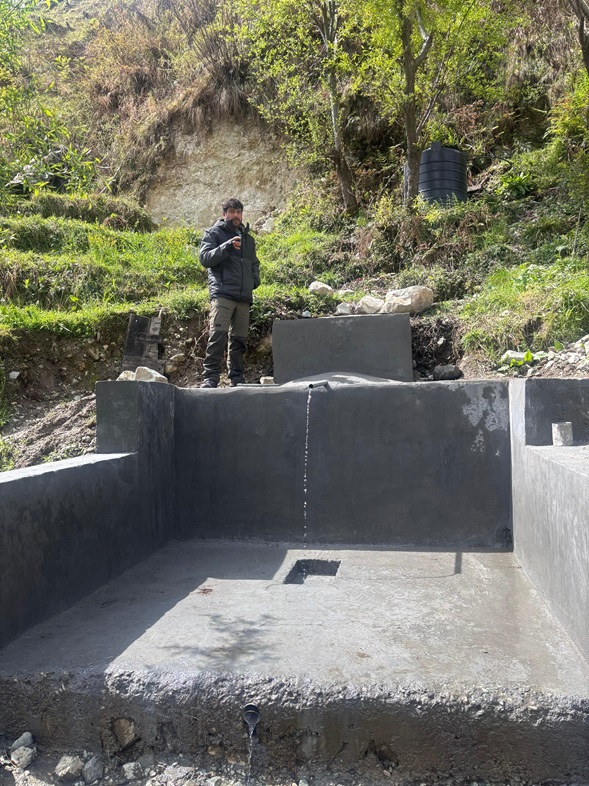
Launched in March 2025, the project over the past one year has successfully revived critical water sources in Nirmand, in the Kullu district of Himachal Pradesh, providing immediate relief to communities facing severe water scarcity.
Across the Hindu Kush Himalayan region, over 100 million people rely on springs, even as warming temperatures and disrupted snowmelt weaken the systems. In the Indian Himalayan Region, natural springs are the backbone of water security yet nearly 50% of these lifelines are failing. In Himachal Pradesh alone, surveys show that 45% of springs have vanished. For Kati Patang, whose craft is rooted in the mountains, protecting these sources is a core responsibility. While the crisis might be quiet, the impact is profound.
“The water that flows through the Hindu Kush Himalayas flows through every brew we make,” said Lata Upadhyay, Co-Founder & Chief Brand Officer, Kati Patang. “A dying natural spring is a dying community. When a spring disappears, fields crack, homes struggle, and slowly families begin to leave. For us, this is not just about restoring water, this is about helping families hold on to their source of life.”
Restoring a spring is not just about engineering. It’s about understanding the landscape and the people who know it best. Kati Patang partnered with Ikaya Earth and sought guidance from experts at CHIRAG and executed a community-driven, science-backed action plan.
What Did We Do?
§ Feasibility & Baseline Studies: Conducted surveys to establish baseline data on water discharge, quality, seasonality, and rainfall
§ Scientific & Local Mapping: Conducted hydrogeological surveys, mapping springs, rock types, fractures and streams to plan recharge areas and determine spring behaviour
§ Built Trust with the Community: Undertook multiple village meetings to build understanding, consent, and shared ownership of the restoration process
§ Local Water Groups: Created Water User Committees, with strong women participation, to manage and sustain springs for the long-term
§ Restoration Plan: Co-developed custom recharge-focused treatment plans with the community
§ Execution On-ground: Community-led restoration using low-impact methods like percolation pits, and trenches, generating local employment
§ Capacity Building: Trained villagers and youth in discharge monitoring, water testing and groundwater basics to ensure lasting stewardship
§ Long Term Maintenance: Set up an operational and management fund and monitoring systems to secure sustained spring performance beyond project completion.
Key Impacts Achieved in 2025
§ Water Security: 2 major springs revived and 5 supporting water sources restored
§ Storage Capacity: 26 lakh litres of new water storage created
§ Community Empowerment: 1,500 people now have reliable water access, saving households up to 10 hours of labour during dry months
§ Sustainability: 117 local villagers trained in groundwater monitoring and two Water User Committees formed to empower communities to protect their own water systems
The restoration utilized a science-backed, community-driven approach and by combining hydrogeological mapping with local knowledge, the team implemented methods like percolation pits and trenches, which also generated local employment.
As next steps, Kati Patang will complete the remaining spring rework, continue to monitor spring discharge, plant native grasses and trees to stabilize slopes and to strengthen discharge and expand training for local Water User Committees in both villages to ensure these lifelines thrive for generations to come.
