India Ports & Logistics Conference 2026 Concludes Successfully, Driving Strategic Dialogue on India’s Maritime Future
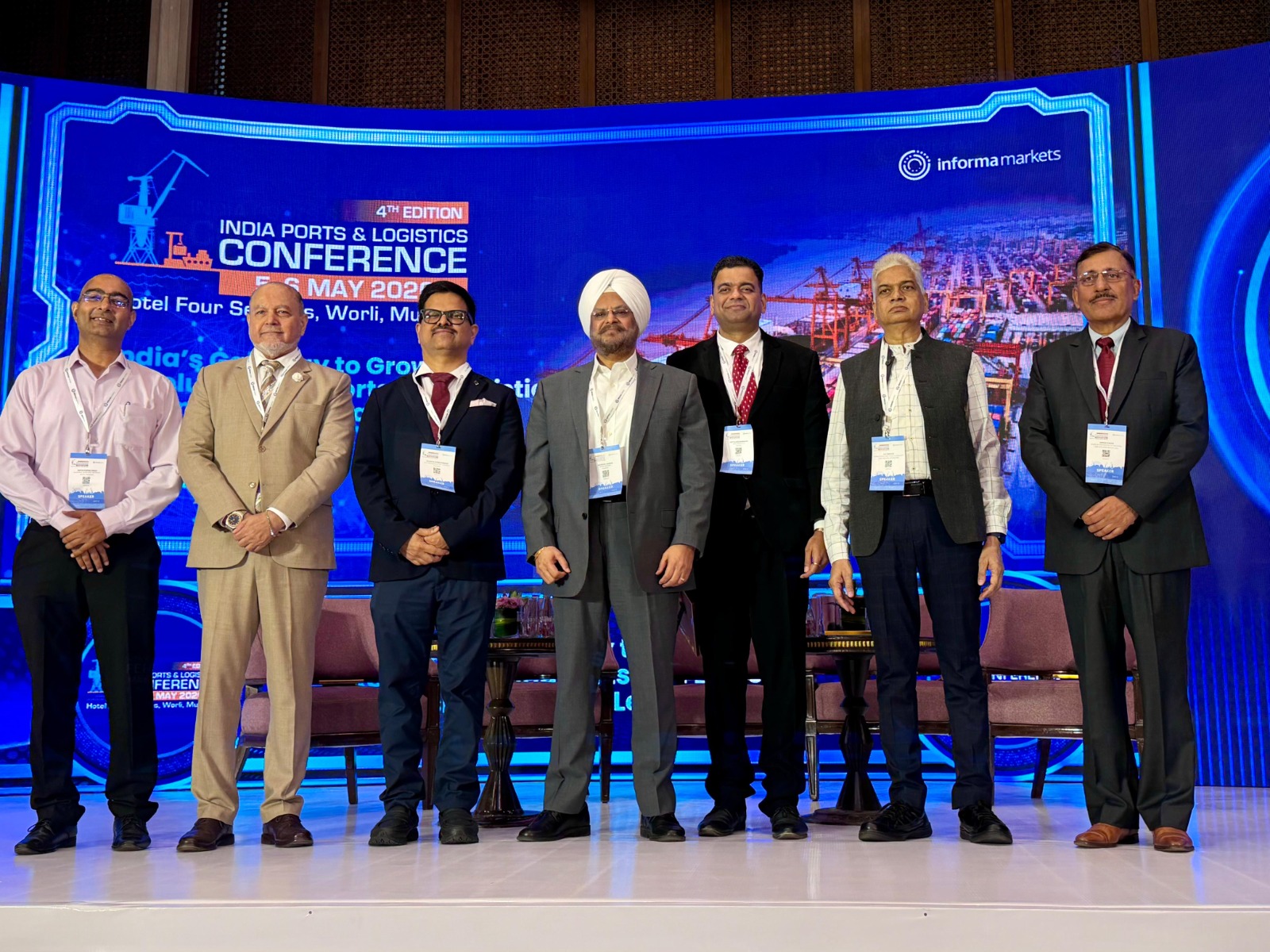
Mumbai, May 8: The India Ports & Logistics Conference (IPLC) 2026, held on May 5–6, 2026 at Hotel Four Seasons, Mumbai, concluded successfully, bringing together 300+ delegates from ports, government authorities, regulatory bodies, shipping lines, infrastructure players, EXIM consultants, key vendors and suppliers to the shipbuilding and repair ecosystem, as well as startups solving next-generation logistics challenges.
The conference featured 47 eminent speakers spanning government agencies, port authorities, global maritime organisations, financial institutions, legal experts, and technology leaders, making it one of the most comprehensive gatherings of maritime and logistics leadership in the country.
Centred around the theme “India’s Gateway to Growth: Revolutionising Ports and Logistics – Vision to Global Leadership,” the conference served as a high-impact platform for aligning policy, industry, and investment perspectives toward India’s maritime ambitions.
The event hosted a distinguished mix of policymakers, port authority leaders, global maritime experts, investors, legal professionals, and technology innovators. Sessions covered critical areas such as the Indian Ports Act 2025, global trade corridors, port-led industrialisation, sustainability and green ports, smart port technologies, maritime law, and investment opportunities.
A key highlight was the discussion on the Indian Ports Act 2025, which underscored the transition toward a modern, transparent, and investment-friendly regulatory framework aligned with India’s Maritime Vision 2030 and 2047 ambitions.
The conference also spotlighted India’s $82 billion port investment pipeline, with discussions emphasising the role of sovereign capital, private equity, and global operators in driving the next phase of maritime infrastructure growth.
Drawing a powerful analogy on global trade, Shri Sushil Khopde, Additional Director General of Shipping, emphasised: “Trade routes are like circulation. If circulation stops, organs fail. A nation’s economic vitality depends on the seamless movement of goods across global corridors.” He further highlighted India’s deep-rooted maritime legacy, noting that the country’s maritime supremacy dates back to the Gupta period, when India maintained active trade linkages with the Roman Empire.
“India has always been a maritime nation at its core. Our history reflects strong global trade connections, and today we are once again reclaiming that position with renewed focus and capability.”
Highlighting the evolving workforce and innovation imperative, Mrs H. K. Joshi, Former Chairperson, Shipping Corporation of India, noted: “The maritime sector is witnessing increasing participation of women, reflecting a positive and progressive shift. The transformation led under the leadership of Hon’ble Prime Minister Shri Narendra Modi ji has been remarkable. It is now time to leverage the enabling ecosystem created by the government and drive disruptive innovation across the sector.”
Mr Davinder Sandhu, Co-Founder & Chairman, Primus Partners, stated: “The Indian Ports Act, 2025 marks a fundamental shift from a regime of control to one of facilitation. This transition is critical in unlocking private capital, improving ease of doing business, and accelerating decision-making across the maritime ecosystem.
More importantly, it repositions ports not merely as gateways for trade, but as engines of economic growth, anchoring industrial development, logistics efficiency, and global competitiveness. This creates a strong foundation for attracting long-term investments into India’s maritime sector.”
As the Knowledge Partner for the 4th edition of IPLC, Primus Partners played a central role in moderating key sessions and driving strategic discourse across policy, infrastructure, logistics, and investment themes, reinforcing its position as a thought leader in India’s ports and logistics ecosystem.
Building on the insights from IPLC 2026, Primus Partners will also develop a comprehensive white paper capturing key discussions, strategic recommendations, and actionable insights to support the continued evolution of India’s ports and logistics ecosystem.
Beyond the formal sessions, IPLC 2026 served as a powerful networking platform, enabling strategic partnerships, knowledge exchange, and business collaborations among participants shaping the future of India’s maritime economy.
As India advances toward its vision of becoming a top-five maritime nation by 2047, IPLC 2026 marks a significant step in bringing together the right stakeholders to accelerate this transformation.