The Dawn of Emotional AI: Can Machines Truly Understand Human Feelings
Emotional AI, or affective computing, enables machines to detect human emotions through facial expressions, voice tones, and behavioral patterns, adapting responses accordingly. While machines do not “feel” emotions, they can analyze, recognize, and simulate empathetic responses with increasing accuracy. This technology offers promising applications in customer service, mental health, and education, but faces significant challenges regarding emotional complexity, ethical considerations, and privacy.
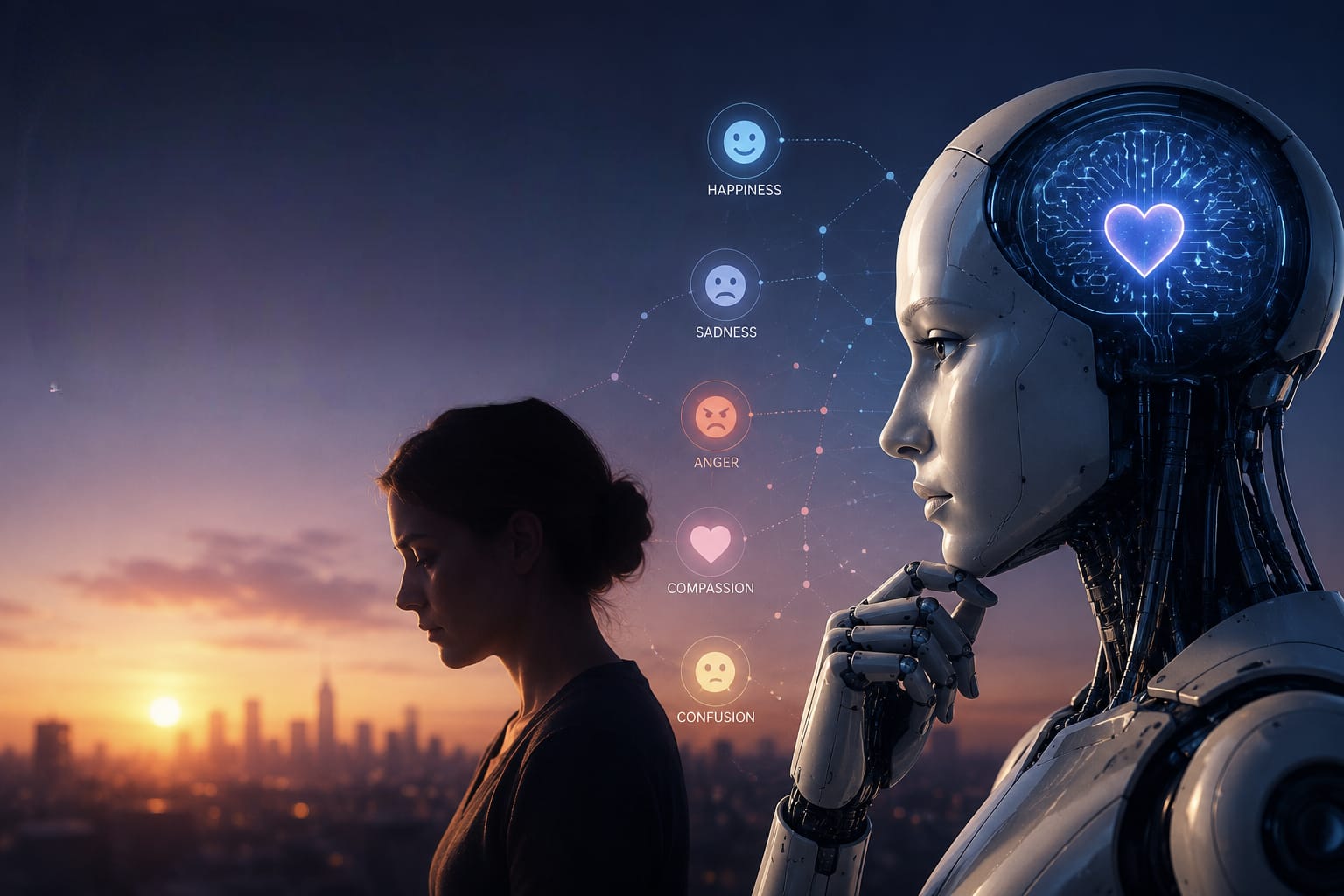
Emotional AI: From Faces to Feelings
The idea of machines recognizing emotions emerged decades ago, but real progress came with advanced algorithms and machine learning. Early systems could only detect simple facial expressions or vocal changes. Today, deep learning models allow AI to analyze complex patterns in speech, facial movements, and even subtle physiological indicators.
These advancements have expanded emotional AI’s role in healthcare, education, customer service, and entertainment. From monitoring stress levels to creating interactive learning experiences, machines can now respond to human emotions with greater sophistication than ever before.
How Emotional AI Works
Emotional AI combines multiple sources of information to understand human feelings:
- Facial Analysis: Detects micro-expressions, eye movements, and subtle facial cues.
- Voice Analysis: Measures tone, pitch, speed, and inflection to interpret mood.
- Physiological Data: Monitors heart rate, skin conductivity, or other signals that indicate emotional states.
By merging these inputs, machines can create a more complete understanding of a person’s emotional condition. This allows for responsive systems that can adapt in real time, improving experiences across professional and personal contexts.
Applications in Everyday Life
Customer Experience: Companies can gauge client emotions during interactions, adjusting responses to increase satisfaction.
Mental Health: Tools can help therapists track emotional patterns, provide insights, and enable early intervention.
Education: Learning platforms can detect student frustration or engagement, tailoring lessons for better comprehension.
Entertainment: Video games, streaming platforms, and interactive media can adapt content based on the audience’s reactions, creating immersive experiences.
Challenges and Limitations
Despite its potential, emotional AI faces notable hurdles:
- Accuracy: Human emotions are nuanced and context-dependent, making precise detection difficult.
- Privacy: Collecting emotional data raises questions about consent and potential misuse.
- Misinterpretation: Sarcasm, cultural differences, or subtle expressions may be misunderstood by machines.
Developing effective and ethical emotional AI requires careful design and rigorous testing.
Ethical Considerations
Emotional AI can influence human behavior, which presents ethical challenges. Misuse of emotional insights—such as manipulating consumer decisions—raises concerns. Clear consent, transparency, and strict guidelines are essential to prevent exploitation and ensure AI enhances human experiences responsibly.
Looking Ahead
The future of emotional AI promises more intelligent, empathetic machines that anticipate human needs. By analyzing multiple data streams, systems could tailor responses to an individual’s emotional state, improving workplace communication, mental health support, and daily interactions.
Yet, philosophical questions remain: Can machines genuinely “feel,” or do they only simulate understanding? Human emotions are shaped by consciousness, personal experience, and culture—elements that AI cannot fully replicate. While machines can respond to emotional cues, true empathy remains uniquely human.
Conclusion
Emotional AI is redefining human-computer interactions, offering tools that can make technology more responsive, supportive, and personalized. However, its development must be guided by ethical principles, transparency, and awareness of its limitations.
By balancing innovation with caution, emotional AI can enhance human experiences, improve mental well-being, and create new possibilities for learning, communication, and entertainment without compromising the authenticity of human emotions.