

Shubhalakshmi Mahananda Makes History as Odisha’s First Woman Electric Bus Driver
Bhubaneswar, Oct 15 (UDN): Breaking gender barriers and steering Odisha towards a more inclusive transport sector, Shubhalakshmi Mahananda from Kendujhar has emerged as the State’s first woman electric bus driver, challenging long-standing stereotypes in a profession traditionally dominated by men.
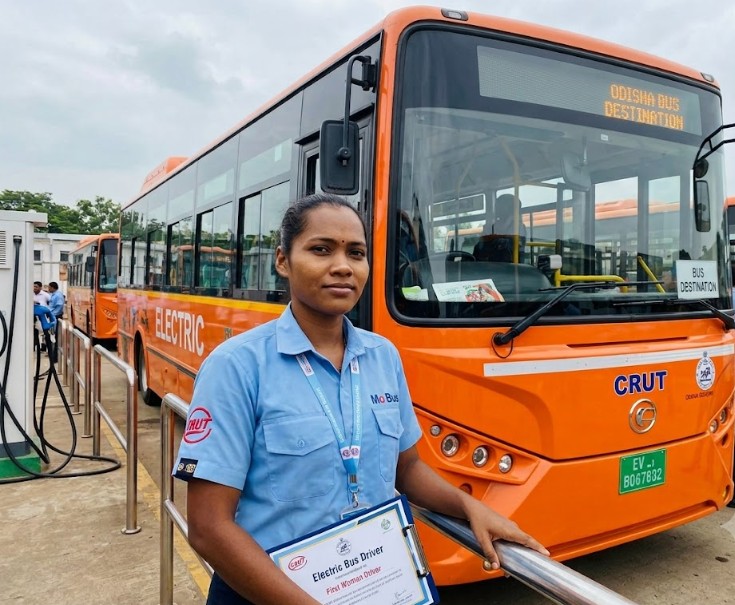
Representational Image
Every day, as an electric bus rolls out of the Ama Bus depot in Kendujhar, Shubhalakshmi takes her place behind the wheel, carrying passengers to their destinations while demonstrating that professional driving is not restricted by gender. Her journey represents a significant step towards expanding women’s participation in public transport and creating opportunities in non-traditional occupations.
Employed as an electric bus driver with Capital Region Urban Transport (CRUT), Shubhalakshmi works in a demanding role that requires technical knowledge, alertness, discipline and a strong commitment to passenger safety. Operating an electric bus also calls for familiarity with its specific systems and operating requirements, making training and practical experience essential to the job.
Her achievement goes beyond an individual milestone. By entering a field where women remain underrepresented, she is helping challenge conventional perceptions about women’s capabilities and the nature of work they can undertake. Her presence on the road may also encourage other women to consider careers that have historically remained difficult to access.
Electric Mobility Expands Beyond Major Cities
Kendujhar, known for its mineral wealth, is also witnessing the expansion of electric public transport. The district currently has 25 electric buses and a dedicated Ama Bus depot, reflecting efforts to extend cleaner mobility services beyond Odisha’s major urban centres.
Electric buses offer the potential to reduce tailpipe emissions and improve local air quality compared with conventional diesel-powered buses. Their growing adoption is also creating new operational requirements and employment opportunities across the public transport ecosystem.
Shubhalakshmi’s experience brings an important social dimension to this transition. It demonstrates how the shift towards cleaner transport can go hand in hand with broader participation in the workforce, provided women have access to appropriate training, employment opportunities and supportive working environments.
A New Perspective on Inclusive Urban Mobility
Her story comes at a time when sustainable transport, accessibility and inclusive urban development are receiving increasing attention across India.
Bhubaneswar is scheduled to host the 19th Urban Mobility India (UMI) Conference and Expo 2026 on October 23 and 24. The city will be the first in eastern India to host the event, whose theme this year is “Urban Accessibility & Liveability in the Digital Age.”
The conference is expected to bring attention to the evolving challenges and opportunities in urban transport, including how mobility systems can become more accessible, efficient and responsive to people’s needs.
While electric vehicles, digital technologies and transport infrastructure remain central to discussions on the future of mobility, the people who operate and sustain these systems are equally important. Women’s participation in transport-related jobs is a key aspect of building a more inclusive sector.
Driving Change Beyond the Road
For women aspiring to enter traditionally male-dominated professions, seeing someone like Shubhalakshmi take charge of a passenger bus can help make previously distant career possibilities seem attainable.
Her journey from Kendujhar highlights how individual achievements can challenge social expectations and broaden the understanding of women’s roles in public life. It also underlines the importance of ensuring that the benefits of technological and environmental progress extend to employment and social inclusion.
As Odisha continues to advance its electric mobility initiatives, Shubhalakshmi Mahananda’s story offers a reminder that progress is not measured by cleaner vehicles alone. It is also reflected in the opportunities created, the barriers overcome and the people empowered to participate in the State’s changing transport landscape.
By taking the driver’s seat, she is not merely transporting passengers; she is helping redefine who can drive Odisha’s mobility transformation.