

East Coast Railway Strengthens Water Safety Measures at Stations
Bhubaneswar, Aug 26: East Coast Railway (ECoR) has intensified inspections and maintenance of drinking water facilities at railway stations to ensure passengers and railway staff have access to clean and safe water.
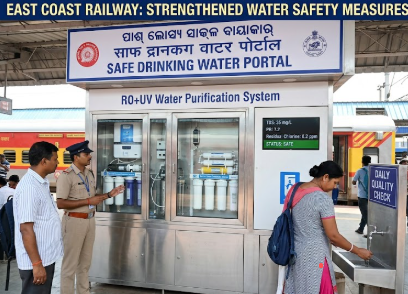
The special drive will cover water sources, treatment plants, filtration units, storage tanks, water booths, taps, coolers and other drinking water facilities. Railway officials will carry out regular inspections and address any shortcomings identified during the checks.
As part of the exercise, water storage tanks will be emptied, cleaned and disinfected at regular intervals. Officials will also examine tank covers, vents and overflow points to prevent contamination. Damaged tanks, pipelines and filtration systems will be repaired or replaced wherever necessary.
The railway will also verify that drinking and non-drinking water arrangements are properly separated to minimise the possibility of contamination. Water coolers and purification systems will undergo detailed checks, with UV- and RO-based facilities to be installed or upgraded where required.
Water samples from selected stations will be tested for physical, chemical and bacteriological quality. Residual chlorine levels will also be monitored regularly. If water fails to meet prescribed safety standards, corrective action will be taken promptly.
The initiative is particularly important because railway stations serve thousands of passengers and employees every day. Ensuring access to safe drinking water can help reduce the risk of water-borne illnesses and strengthen public-health protection.
East Coast Railway will also identify station-wise gaps in water infrastructure and monitor the progress of corrective measures. The inspection programme will include drinking water facilities at railway colonies and workplaces.
The enhanced monitoring and maintenance efforts are aimed at improving hygiene standards, strengthening water-safety measures and ensuring passengers can depend on clean drinking water during their journeys.