

Makaibari Tea Launches Collective to Strengthen Darjeeling’s Small Growers Producing Tea Organically
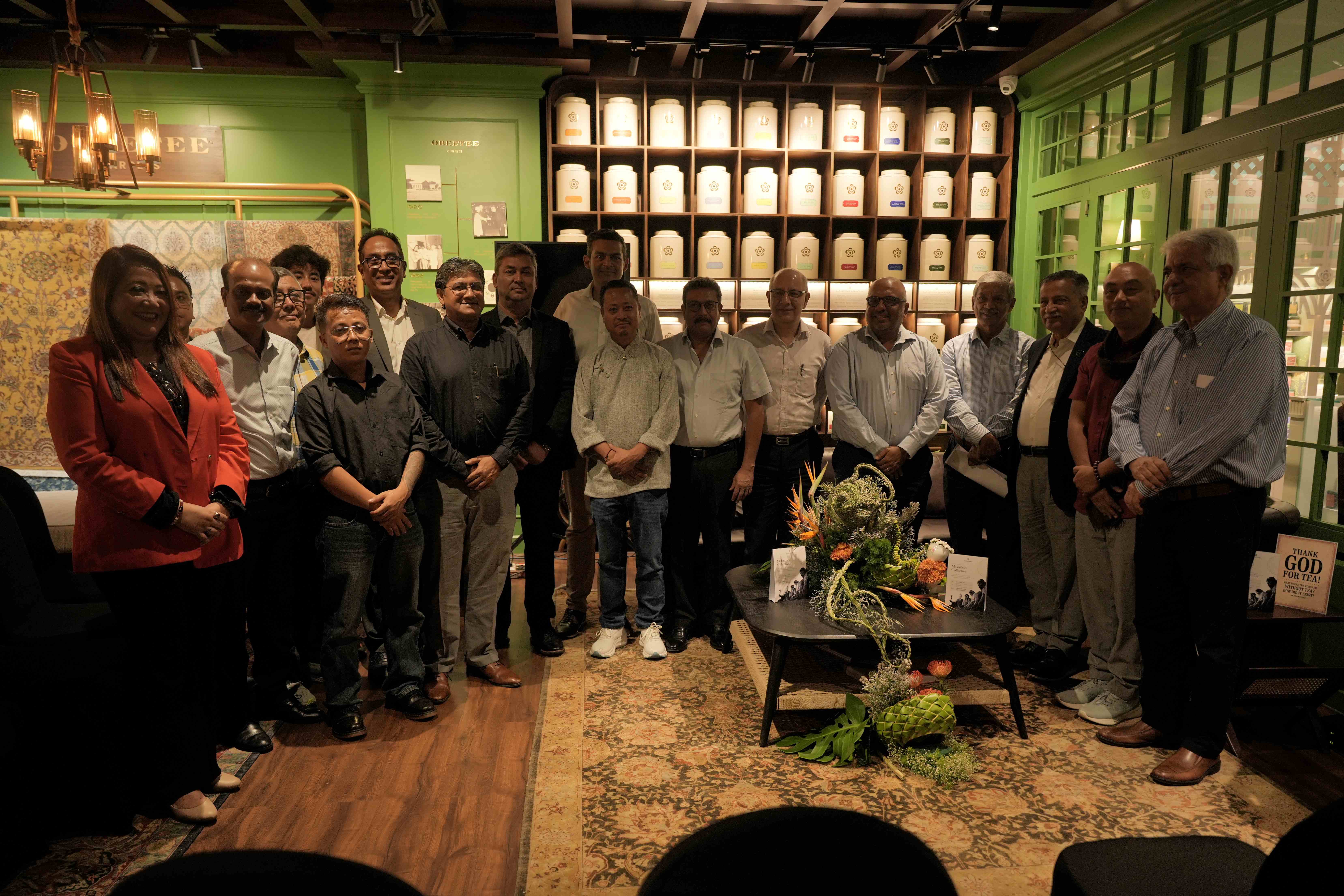
The Makaibari team with guests at the announcement of Makaibari Collective at Makaibari Bungalow, Taj Bengal, Kolkata
Sept 01: Makaibari, one of India’s most celebrated heritage tea estates, announced the launch of Makaibari Collective, a new initiative designed to strengthen the livelihoods of small tea growers producing organically grown tea across Darjeeling and build a more resilient future for the region’s tea economy.
The Collective brings together organically grown tea produced by small farmer cooperatives across Darjeeling under the Makaibari name. Importantly, these growers will not have to build a market from scratch. Makaibari will consolidate its established Apoorva and Green Valley tea ranges—together representing a market of more than ₹10 crore—into the new Collective.
This means that small growers gain something often difficult for them to access: an established market, an existing customer base and proven distribution channels from day one.
Why the Collective matters
Darjeeling’s tea story is not built only by its large and historic estates. It also depends on thousands of small growers and farming communities whose plots, knowledge and organic cultivation practices form an important part of the region’s agricultural landscape.
Yet small growers often face a fundamental disadvantage: they produce on a much smaller scale and have limited access to premium markets, quality infrastructure, branding and bargaining power. As a result, the value created by Darjeeling tea does not always flow equitably back to the people who grow it.
The Makaibari Collective is designed to address this gap.
Rather than asking individual small growers to compete independently in an increasingly difficult market, the Collective brings them together, gives them access to Makaibari’s established market infrastructure and creates a mechanism through which they can participate in the value generated by the finished product.
In this sense, the Collective is intended to strengthen not just individual farmers, but the larger social, economic and ecological ecosystem of Darjeeling tea.
How the Makaibari Collective works
-
An established market from the start: The Collective will absorb and replace the existing Apoorva and Green Valley ranges, bringing an existing market of more than ₹10 crore into the new model. This gives participating growers immediate commercial scale rather than requiring them to build a new brand and customer base from zero.
-
Training and quality improvement: Makaibari will work with participating cooperatives engaged in organic farming to establish stringent quality standards and provide training to help growers consistently meet premium and international benchmarks. The quality of tea supplied to the Collective will be independently evaluated by J. Thomas & Company.
-
Fairer value distribution: Prorated profits generated based on quantity supplied to Makaibari Collective sales will be returned to participating self-help groups and farmer cooperatives. This creates an ongoing mechanism for value to flow back to the communities producing the tea. Profit-sharing will be calculated on a pro-rata basis, in proportion to the quantity of tea each grower or cooperative has supplied.
-
Greater market security: Participating growers will have access to a more stable and predictable market for their organically grown tea, reducing their dependence on uncertain or fragmented routes to market.
-
Building regional resilience: By strengthening small growers and encouraging high-quality organic cultivation, the Collective aims to support the long-term economic and ecological resilience of Darjeeling’s tea-growing communities.
For consumers, the Collective will offer teas with the quality and provenance associated with Makaibari, while allowing them to participate in a model where the product’s success is more directly connected to the communities that produce it.
Rudra Chatterjee, Managing Director, Luxmi Tea Co Private Ltd, said, “ For generations, Makaibari has been sustained by the trust of people who choose our tea. For our everyday Darjeeling tea category, through the Makaibari Collective, we extend that trust beyond our own estate — to the small growers who have always been part of Darjeeling’s story. Every leaf will be verified, tasted, and fairly priced before going into the pack, and every grower who joins us will share not just in selling their tea, but in the value it creates”
Makaibari’s existing portfolio of high-end, estate-grown teas will continue to be produced, exported and distributed through premium retail channels, maintaining the estate’s position in the luxury tea segment.
The Makaibari Collective will begin rolling out from Diwali 2026, positioning the initiative to enter the important festive gifting season while building towards sustained, year-round demand.
For Makaibari, this is an extension of its long-standing commitment to Darjeeling and its farming communities. For the region, it offers a new possibility: that the future of Darjeeling tea can be built not only by protecting its heritage, but by creating stronger, fairer and more sustainable economic opportunities for the small growers who are an essential part of that heritage.