
Seed Packaging takes centre stage, experts call for Sustainable, Tech-driven solutions
Hyderabad, Jan 12: The future of India’s seed sector—and by extension, its food security—came into sharp focus on Friday at the day long Conference on “Emerging Trends in Sustainable & Innovative Techniques for Seed Packaging”, organised by the Indian Institute of Packaging (IIP) at FTCCI in Red Hills, in the citY. The conference concluded late in the evening. Over 100 delegates participated.
Bringing together policymakers, industry leaders, scientists, packaging technologists, and young professionals, the conference highlighted how seed packaging has evolved from a basic containment function into a strategic pillar of agricultural performance, sustainability, and global trade compliance.
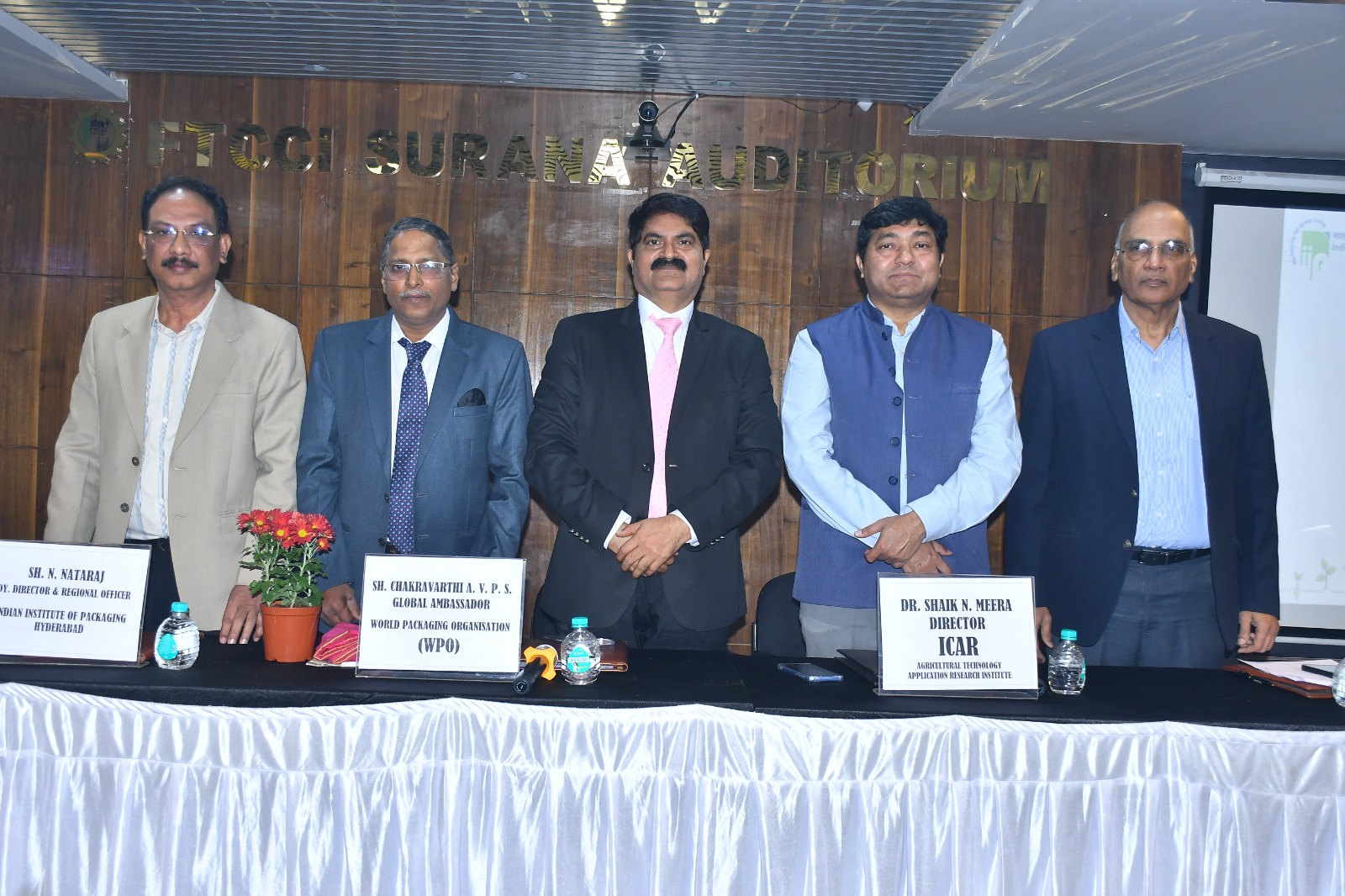
The inaugural session featured eminent dignitaries including Mr. N. Nataraj, Deputy Director & Regional Officer, IIP Hyderabad; Mr. Ram Kaundinya, Advisor, Federation of Seed Industry of India; and Dr. Shaik N. Meera, Director, ICAR–Agricultural Technology Application Research Institute (ATARI), Zone X, Hyderabad.
Experts from organisations such as APEDA, CIPET, NIC, Plant Quarantine Stations, engineering firms, and design studios provided practical insights into compliance, innovation, and future-ready solutions.
Highlighting the farmer’s perspective, Mr. Ram Kaundinya said: “For farmers, the first physical interaction with a seed is through its package. That moment determines trust. Effective seed packaging safeguards quality, ensures authenticity, and protects farmers from spurious products—making it a cornerstone of a reliable seed ecosystem.”
Delivering the Guest of Honour Keynote Address, Mr. Chakravarthi AVPS, Global Ambassador, World Packaging Organisation and International Trade & Business Relations Expert, set the tone with a compelling message:
“Every farmer’s season begins with a seed—and the farmer’s trust begins with how that seed reaches his or her hands. Seed packaging is no longer an auxiliary activity. It is a strategic intervention.”
Addressing an audience comprising senior industry leaders, researchers, and students, Mr. Chakravarthi underlined that seed packaging carries the responsibility of protecting the promise of a harvest, especially in an era shaped by climate stress, long supply chains, and sustainability mandates.
Highlighting Telangana’s strategic importance, he noted that the state has emerged as India’s Seed Capital, contributing nearly 30–35% of the country’s hybrid seed production, particularly in cotton, maize, rice, and vegetables.
With over 300 seed companies, including leading Indian and global players, and Hyderabad evolving into a national hub for seed R&D, testing, certification, and exports, the region plays a pivotal role in food security, rural livelihoods, and agri-exports.
For seed-producing regions like Telangana, where seeds travel across agro-climatic zones and international markets, packaging directly influences field performance,” he said.
Dr. Shaik N. Meera, Director, ICAR–ATARI, Zone X, Hyderabad, highlighted the role of last-mile impact, stating: “ The value of agricultural research is realised only when technologies reach farmers in an effective and usable form. Scientific seed packaging plays a crucial role in preserving seed quality, reducing losses, and ensuring that research-driven innovations deliver results at the field level.”
Speakers across multiple technical sessions echoed the sentiment that modern seed packaging must go far beyond containment. Today’s packaging solutions must ensure: Genetic purity and varietal integrity, Long-term viability during storage and transport, Protection against moisture, oxygen, pests, and contamination, Clear traceability and farmer confidence, Reduced environmental footprint
The conference showcased innovations in recyclable materials, mono-material structures, advanced barrier technologies, fumigation techniques, AI applications, and quality control testing, reinforcing the idea that sustainability must be built by design, not by intent.
In a world of regulated and interconnected supply chains, packaging protects not just seeds, but the credibility of the seed industry itself,” Mr. Chakravarthi observed.
The Indian Institute of Packaging was widely acknowledged as a key catalyst—bridging science, industry, policy, and practice. The conference featured sessions on processing techniques, fumigation, branding, export regulations, AI applications, machinery, and testing of packaging materials, offering a comprehensive view of the seed packaging ecosystem.
The conference concluded with an interactive Q&A session, reinforcing the collective resolve to position India—and Telangana in particular—as a global benchmark for responsible, farmer-centric, and sustainable seed packaging solutions.
—