
The Passing on of a Celebrated Indian Microbiologist
Hyderabad, Dec 1: Dr Shivaji Sisinthy, celebrated scientist and microbiologist, Emeritus Director of Research and Senior Scientist at the L V Prasad Eye Institute (LVPEI), passed away due to illness earlier this month.
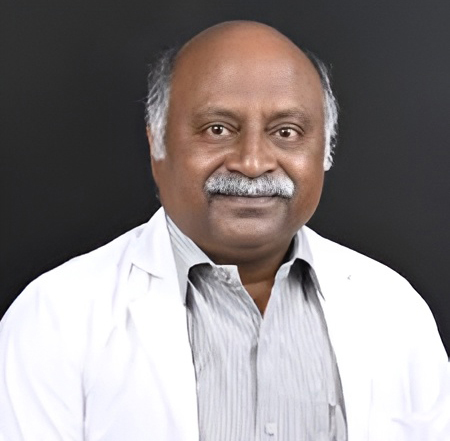
Dr Shivaji had published over 375 research papers and is famous for being the first Indian biologist to have been part of expeditions to both the Arctic and Antarctic. He spent a few weeks at India’s Dakshin Gangotri station near the Schirmacher oasis. His work on the microbiota at the Earth’s poles, including the Himalayas and the higher altitudes of the atmosphere, and their survival mechanisms at temperature extremes earned him a unique position in Indian science. He ended up identifying 3 novel bacterial clusters unique to these extreme regions and was awarded the Antarctic Award for excellence in Biological Sciences in 2002 for his work, the Carl Woese Memorial Award in 2014 by the Association of Microbiologists, India, and the National Award in Polar Sciences and Cryosphere by the Government of India in 2016.
Shivaji graduated with an MSc in Biology from BITS Pilani in 1973. He went to do his PhD from Delhi University in 1978, and post-doctoral research at the Indian Institute of Sciences (IISc), Bengaluru. He then joined the Centre for Cellular and Molecular Biology (CCMB) in Hyderabad in 1980 as a microbiologist. During his tenure at CCMB, he worked with researchers at the Max Plank Institute at Göttingen, Germany, and later at the National Institute of Biochemistry and Biotechnology at Okazaki, Japan as part of an Indo-German and Indo-Japanese scientific collaboration. Shivaji ran a robust group of Ph. D students and postdoctoral researchers publishing many papers in reputed journals. He is listed amongst the top 2% of microbiologists in the Elsevier/Stanford University list of scientists in India.
He worked as a director-grade scientist at the CCMB and helped establish the Laboratory for the Conservation of Endangered Species (LACONES) campus at Hyderabad. Besides animals in local areas, he went on to study
endangered species of wild cats, elephants and tigers in Central India. He retired from CCMB in 2012 and joined the L V Prasad Eye Institute (LVPEI) Hyderabad in 2013, going on to serve as Director of the Prof Brien Holden Eye Research Centre at LVPEI from 2016 to 2020. He was a Fellow of the Indian Academy of Science (IASc), the National Academy of Sciences (NASI) and the Telangana Academy of Sciences (TAS).
At LVPEI, in his last decade, his research was focused on the ocular microbiome and its relationship to the gut microbiome. Using conventional cultures and next generation sequencing methods, he documented the various fungal genera, and characterizing a ‘core’ microbiome that represented a healthy, ‘Indian’ ocular surface. His contributions to microbiology and molecular microbiology of the human ocular surface are worth noting and celebrating today. He had also written 3 books in the area of microbiomes, two of which are already published by Springer-Nature and the third one will come out soon.
“In the passing of Dr. Shivaji, India lost an eminent scientist, and we at the LVPEI lost one of the biggest contributors to our research program. He was a rare combination of intellect, integrity, and humility, making him an inspiring example for the future generation of scientists,” said Dr Gullapalli N Rao, Founder-Chair of the L V Prasad Eye Institute.
India mourns a unique scientist who studied microbes in the vast Polar regions and in our gut. Dr Shivaji is remembered by his family, friends and colleagues from across the scientific community.