
The 17th Apeejay Kolkata Literary Festival Concludes with Celebration of Ideas, Literature, and Community
Kolkata, Jan 13: The 17th edition of the Apeejay Kolkata Literary Festival (AKLF) drew to a close today with a final day that brought together crime writers, philosophers, translators, filmmakers, and poets in a celebration of literary and cultural exchange. Across Alipore Museum, Oxford Bookstore, Park Street, and The Park Hotel, the closing sessions reflected on questions of identity, heritage, tolerance, and the creative spirit that animates Kolkata’s literary imagination.
The valued festival partners for the three-day literary celebration include the Goethe-Institut/Max Mueller Bhavan Kolkata, the Embassy of France in India, Institut Français en Inde, Alliance Française du Bengale, The Antonym Collections, Glenburn Penthouse Calcutta, and Sunrise Masala. Kenilworth Hotel, Kolkata, and The Park, Kolkata, are the hospitality partners, while Cha Bar and Cafe Coutume serve as the refreshment partners. 93.5 Red FM is the radio partner; Teacher’s Centre and The Heritage College, Kolkata, are the institutional partners. Balaji Ads, along with Navkrit Brand Solutions and Leven Events, complete the list as outdoor media partners and event partners, respectively.
The final day at Alipore Museum opened with ‘Duty Calls’, where Amit Lodha and Rudraneil Sengupta discussed the craft of crime thrillers with Jashodhara Chakraborti, exploring the intersection of real-life law enforcement and fictional narratives of crime, justice, and moral complexity.
This was followed by ‘Echoes of Eternity’, a reflective conversation between Pavan K Varma and Anjum Katyal on Indian philosophical thought down the ages, tracing the evolution of ideas and the enduring questions that have shaped Indian intellectual traditions. Leadership and organisational wisdom took centre stage next in ‘Growing People: Leads on Management and Leadership’, where Akshay Jaitly, Nirupama Subramanian, and Rajesh Ramakrishnan engaged with Aritra Sarkar on the principles and practices that cultivate effective leadership in contemporary institutions.
One of the most anticipated sessions of the day, ‘On Living, Dying and Everything that Matters’, featured the celebrated writer Jerry Pinto in conversation with Arundhati Ghosh on his latest work, ‘A Good Life: The Power of Palliative Care’, exploring themes of mortality, meaning, and the profound questions that define palliative care.
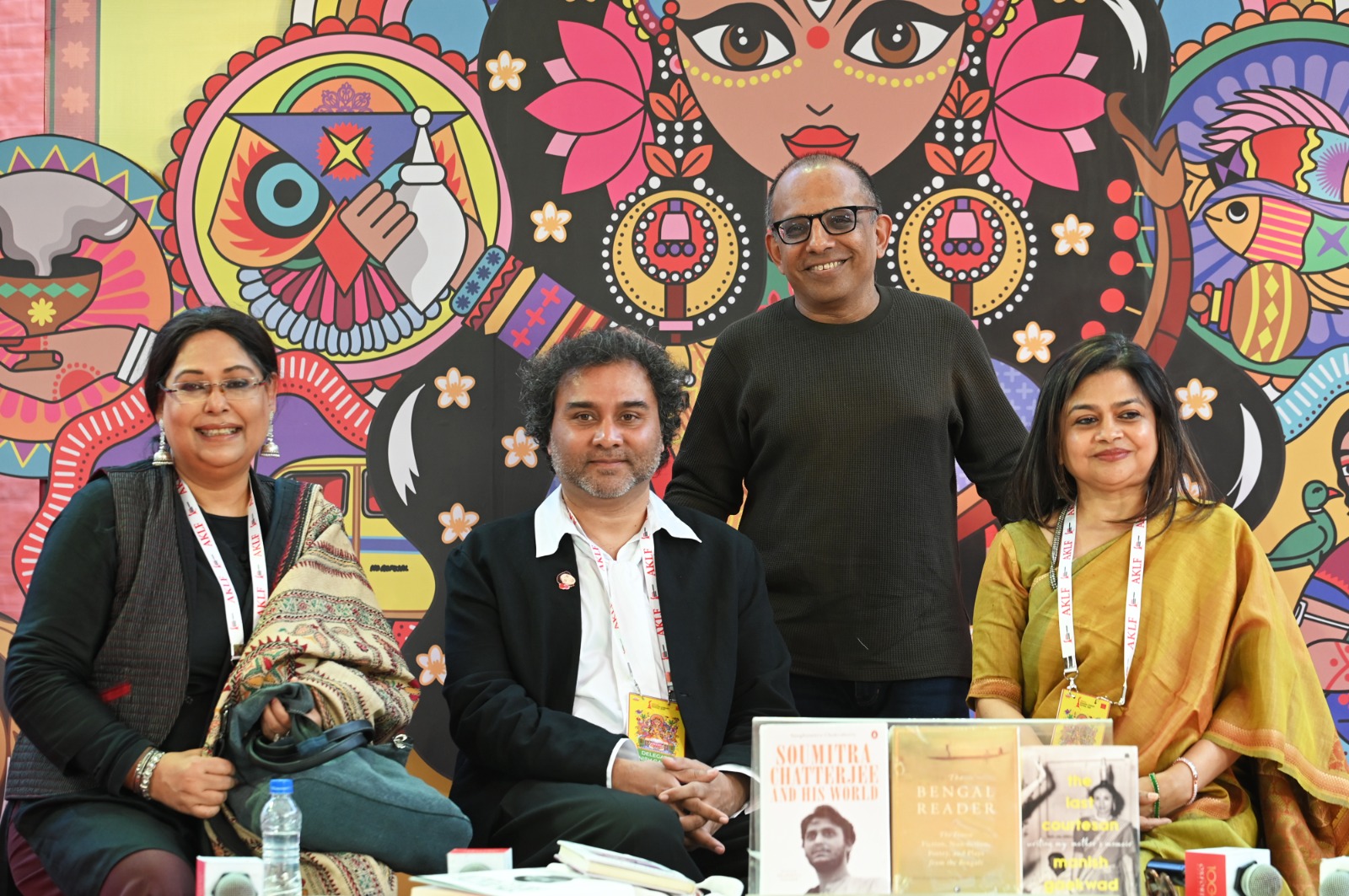
Kolkata’s rich cultural tapestry was examined in ‘From ‘Feluda’ to the Kothas’, where Sanghamitra Chakraborty, Manish Gaekwad, and Poulami Chatterjee Bose discussed the city’s diverse cultural worlds with translator Arunava Sinha, from detective fiction to the courtesan culture, revealing the layers of Kolkata’s artistic and social history.
The afternoon continued with ‘The Sensual Self’, an intimate conversation between the trailblazing Shobhaa De on her new book ‘The Sensual Self’ with Sandip Roy on desire, identity, and the body, challenging conventions around gender, sexuality, and self-expression in contemporary India.
The Apeejay Jit Paul Memorial Lecture 2026 marked a significant moment in the day’s proceedings, with Pavan K Varma delivering a thought-provoking address on ‘Are we a Tolerant Society? Heritage, History, Reconciliation’, chaired by Dr Jayanta Sengupta, Director of Alipore Museum. The lecture examined India’s historical traditions of pluralism alongside contemporary challenges to tolerance and coexistence.
Questions of media ethics and representation followed in ‘Whose Voice Is It Anyway – Media Matters’, where senior journalist Pamela Philipose spoke with Sujata Sen about the changing landscape of journalism, the pressures on press freedom, and the responsibilities of storytelling in a polarised age.
The evening brought ‘Celebrating the City: An Adda’, a freewheeling conversation on Kolkata stories then and now, featuring Anita Kar, Aritra Sarkar, Bachi Karkaria, and Shaun Kenworthy with Husna-Tara Prakash. The session captured the spirit of Kolkata’s beloved adda culture, reflecting on how the city has evolved while retaining its distinctive character.
The Alipore Museum leg of AKLF had the ‘Pujo Special: Celebrating the Durga Pujos of Bengal’, co-presented with Sunrise Masala, as its last session, where Moon Moon Sen, Sayantan Maitra, and Tonmoy Roychoudhury spoke with Ushoshi Sengupta about Bengal’s most beloved festival, exploring the artistic, cultural, and social dimensions of Durga Puja as both tradition and contemporary spectacle.
At Oxford Bookstore, Park Street, the afternoon opened with an international dimension with a session featuring critically-acclaimed French author Neige Sinno, who discussed her award-winning book ‘Sad Tiger’ with Baisali Chatterjee Dutt, in a conversation co-presented with the French Institute in India and Alliance Française du Bengale.
Next up was the session, ‘The Fractured Voice: Stories from Conflicted Bengal, Punjab and Assam’, where Ishmeet Kaur, Epsita Halder, and Shehnab Sarin engaged with Paromita Chakravarti on narratives emerging from regions marked by conflict, displacement, and contested histories.
The third session at Oxford Bookstore was ‘Face to Face: Translators and their Authors’, bringing together Bengali writers Adhir Biswas, Sakyajit Bhattacharya, and Jayanta Dey, and their respective translators V. Ramaswamy, Arunava Sinha, and Sayari Debnath, with moderating duties being handled by Epsita Halder. The session featured the Kolkata launch of Arunava Sinha’s 100th translation – ‘The Bengal Reader’ – a milestone achievement in literary translation that has made Bengali literature accessible to readers worldwide.
The concluding session at Oxford Bookstore was ‘Queer Tales’, where novelists Sudipto Pal, Rahul Singh, and Sandip Roy discussed their works with Arundhati Ghosh, examining representations of queer lives, love, and identity in contemporary Indian fiction.
At Galaxy, The Park, the evening began with the much-anticipated Oxford Bookstore Book Cover Prize shortlist announcement. An esteemed jury comprising Dr Alka Pande, Anja Riederberger, Dr Kunal Basu, Dr Shashi Tharoor, Samar Jodha, and Shobhaa De presented the 7 shortlisted covers, celebrating the art of book design and its role in the reading experience.
This was followed by a centennial tribute to filmmaker Raj Khosla, presented by Amborish Roychowdhury and G.M. Kapoor. The tribute honoured the director’s contributions to Hindi cinema, continuing AKLF’s tradition of paying homage to cultural icons who have shaped India’s artistic landscape, following earlier tributes to figures like Mahasweta Devi.
The 17th Apeejay Kolkata Literary Festival ended with the Kolkata launch of Dr Shashi Tharoor’s latest work, ‘The Sage Who Reimagined Hinduism: The Life, Lessons and Legacy of Sree Narayana Guru’. In conversation with Dr Alka Pande, Dr Tharoor explored the life and teachings of the social reformer whose philosophy of universal brotherhood and spiritual equality transformed Hindu thought and practice in modern India. Dr Tharoor had also attended a full-house special book signing event at the Oxford Bookstore before proceedings started at Galaxy, The Park.
The Oxford Junior Literary Festival (OJLF), held in collaboration with the Progressive Educational Techniques Society (Teacher’s Centre) at Oxford Bookstore, Park Street, concluded with sessions that delighted young readers. Author Anita Nair engaged students from Classes 2 to 5 through storytelling, followed by ‘Dancing Words: Poetry and Movement’ with Baisali Chatterjee Dutt, combining literary expression with physical performance. The last session of OJLF was ‘Wordom – The Kingdom of Word Games’ with Tonmoy Roychoudhury, aka Roy, for middle school students from Classes 6 to 8, making language learning playful and engaging.
The AKLF Poetry Café, presented in association with Alliance Française du Bengale at Alipore Museum, opened with Amitabh Singh Baghel presenting the poetry of Urdu poet Noon Meem Rashid, introducing audiences to one of Urdu literature’s modernist voices. Subsequent ‘Poetspeak’ sessions featured Jeet Thayil and Ananya Chatterjee, followed by Jerry Pinto and Anjana Basu, offering intimate readings and reflections on the poetic craft. The final Poetry Café offering was ‘Voices of the City’, presented by the Intercultural Poetry and Performance Library (IPPL), a fitting tribute to Kolkata’s multilingual, multicultural literary heritage.
With three days that encompassed literature, cinema, history, philosophy, activism, translation, and poetry, the 17th Apeejay Kolkata Literary Festival reaffirmed its place as one of India’s most thoughtful and expansive literary gatherings. The festival’s commitment to diverse voices, challenging conversations, and the celebration of Kolkata’s cultural imagination ensures its continued relevance and vitality in the literary calendar.