
India Book Market Report Edition 3 Promises Holistic View of Publishing Formats

New Delhi, January 14, 2026:
The Federation of Indian Publishers (FIP), in collaboration with NielsenIQ BookData, has announced the launch of the India Book Market Report – Edition 3, a study that will assess changes in India’s publishing industry across print, digital and audiobook formats, along with their economic contribution.
The announcement was made during a media interaction at the New Delhi World Book Fair 2026. The report is expected to be released by August–September 2026.
Speaking at the event, Pranav Gupta, Vice President of FIP, said the third edition marks a departure from earlier studies that focused largely on print publishing. “This report will cover the Indian print book market along with all forms of digital publishing, including audiobooks, and will also measure their economic contribution to the Indian economy,” he said.
Pranav Gupta referred to the India Book Market Report 2022, which estimated that India has over 24,000 publishers and publishes more than 2.5 lakh ISBNs annually, with school education accounting for 71 per cent of the print market, followed by higher education at 25 per cent and trade publishing at 4 per cent.
He added that the new edition will analyse print and digital formats together to present a clearer, data-backed picture of how the industry is evolving. For the first time, the study will also examine the economic impact of digital publishing.
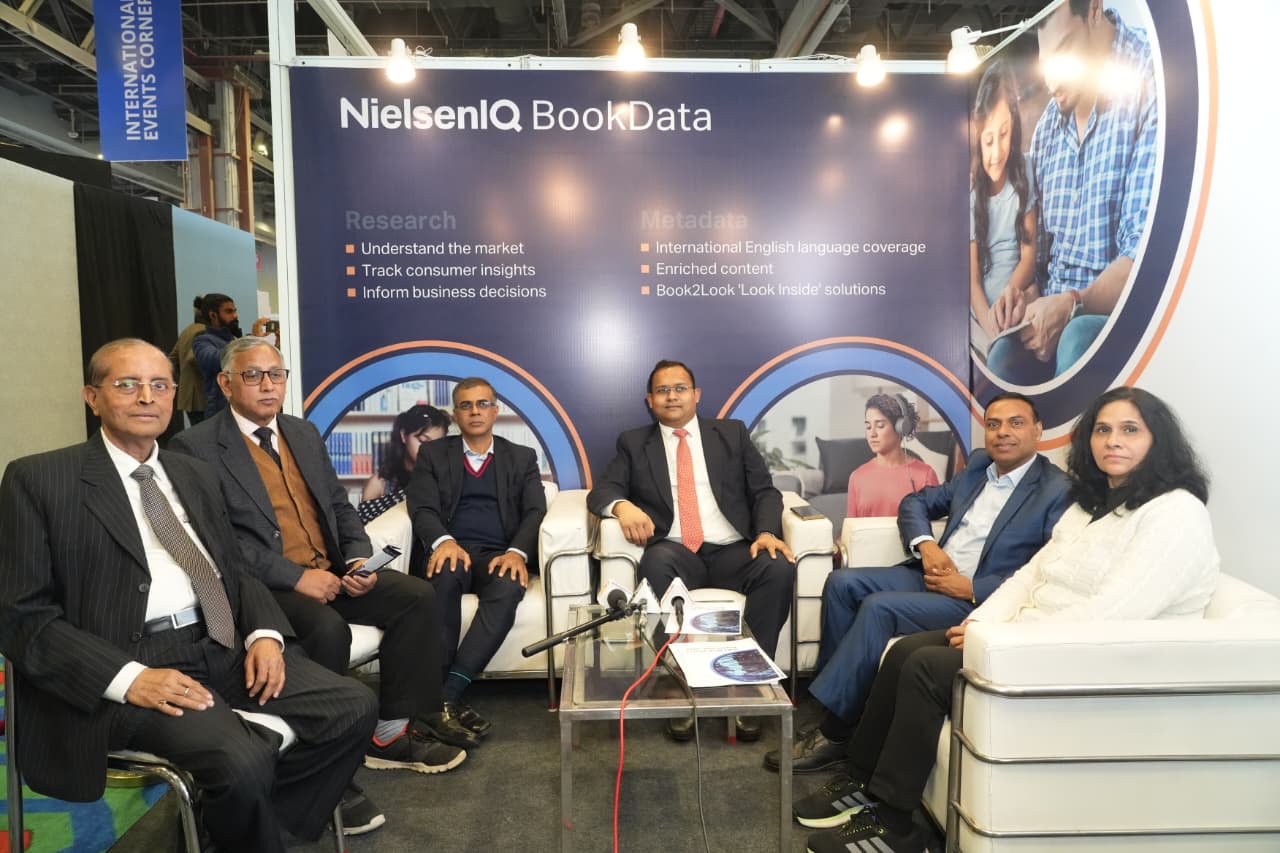
Vikrant Mathur, Executive Director, NielsenIQ BookData India, said earlier editions of the report examined the impact of COVID-19 on the sector, education infrastructure expansion, enrolment trends across school boards, import-export patterns, copyright policy and piracy-related challenges.
“The idea now is to revisit the market after five years and understand how digital publishing is growing—its scale, direction and segment-wise impact across school, higher education and general trade,” Mathur said.
He added that the report would also benchmark publishing against other entertainment industries such as music and films to assess relative growth and economic contribution, with findings expected to support industry stakeholders and policy discussions.