
Findability Sciences Champions AI-Led Rural Transformation at Maharashtra CEO Roundtable with Hon’ble Chief Minister in Mumbai
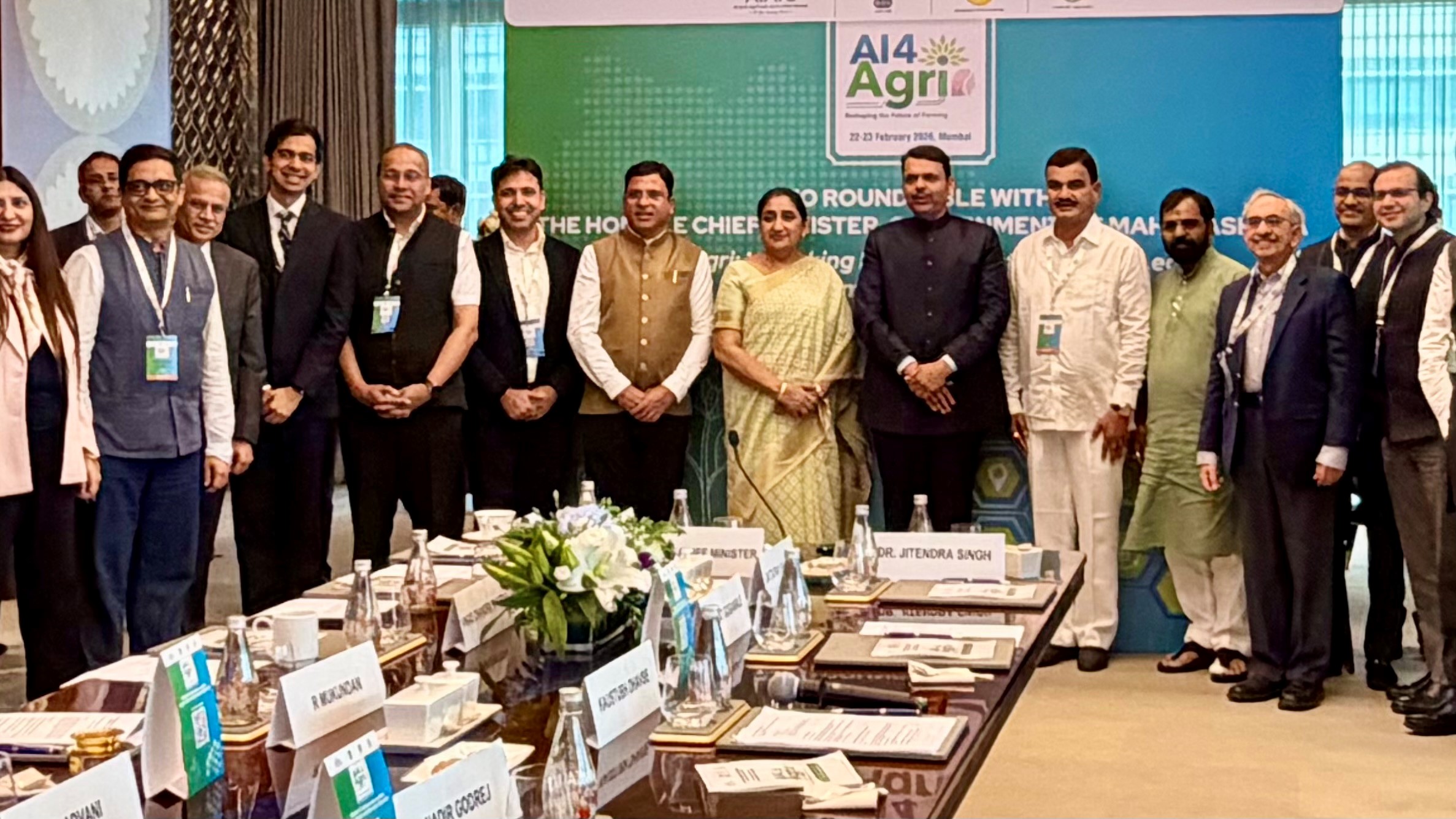
Mumbai, Feb 23: Findability Sciences, a leading global AI company, today reinforced its commitment to accelerating AI-driven transformation across rural Maharashtra at the CEO roundtable hosted by the Chief Minister of Maharashtra, Shri Devendra Fadnavis, on the sidelines of the AI4Agri 2026 Global Conference in Mumbai’s Bandra-Kurla Complex.
The high-level roundtable convened visionary leaders from India’s top enterprises including Godrej, Mahindra, Reliance, Tata, and Jain Irrigation alongside Union MoS Jitendra Singh, DCM Sunetra Pawar, Ministers Dattatray Bharane, Bharat Gogawale, Ashish Jaiswal and principal state leadership to chart a collaborative roadmap for AI in agriculture.
Anand Mahurkar, Founder and Chief Executive Officer of Findability Sciences, emphasized the immense potential of artificial intelligence to empower the backbone of rural Maharashtra: from farmers and dairy producers to the state’s expansive agrarian ecosystems.
At the roundtable, Mr. Mahurkar shared pragmatic, scalable ideas including:
• AI-enabled crop monitoring via remote sensing technologies enabling real-time field insights for crop health, and yield forecasts without upfront capital burden on farmers.
• Government–industry partnerships in dairy and sugar sectors, leveraging advanced AI to reduce systemic losses, improve operational efficiencies, and drive profitability for state producers and cooperatives.
“We are encouraged by the Maharashtra Government’s vision to harness AI for inclusive growth,” said Mr. Mahurkar. “With strategic collaboration between the public sector and industry leaders, we can extend the reach of high-impact technology into the daily livelihoods of farmers and rural enterprises.”
The CEO Roundtable part of the broader AI4Agri 2026 Global Conference on Agriculture and AI reflects a shared commitment by government and private sector stakeholders to co-innovate solutions that elevate farmer incomes, bolster food security, and enhance resilience in the face of climate volatility.