

COWE INDIA, UNDP join hands to build self-sustaining childcare model for working women
Two Aveksha centres to pilot a funding model involving industry, corporate CSR and parents
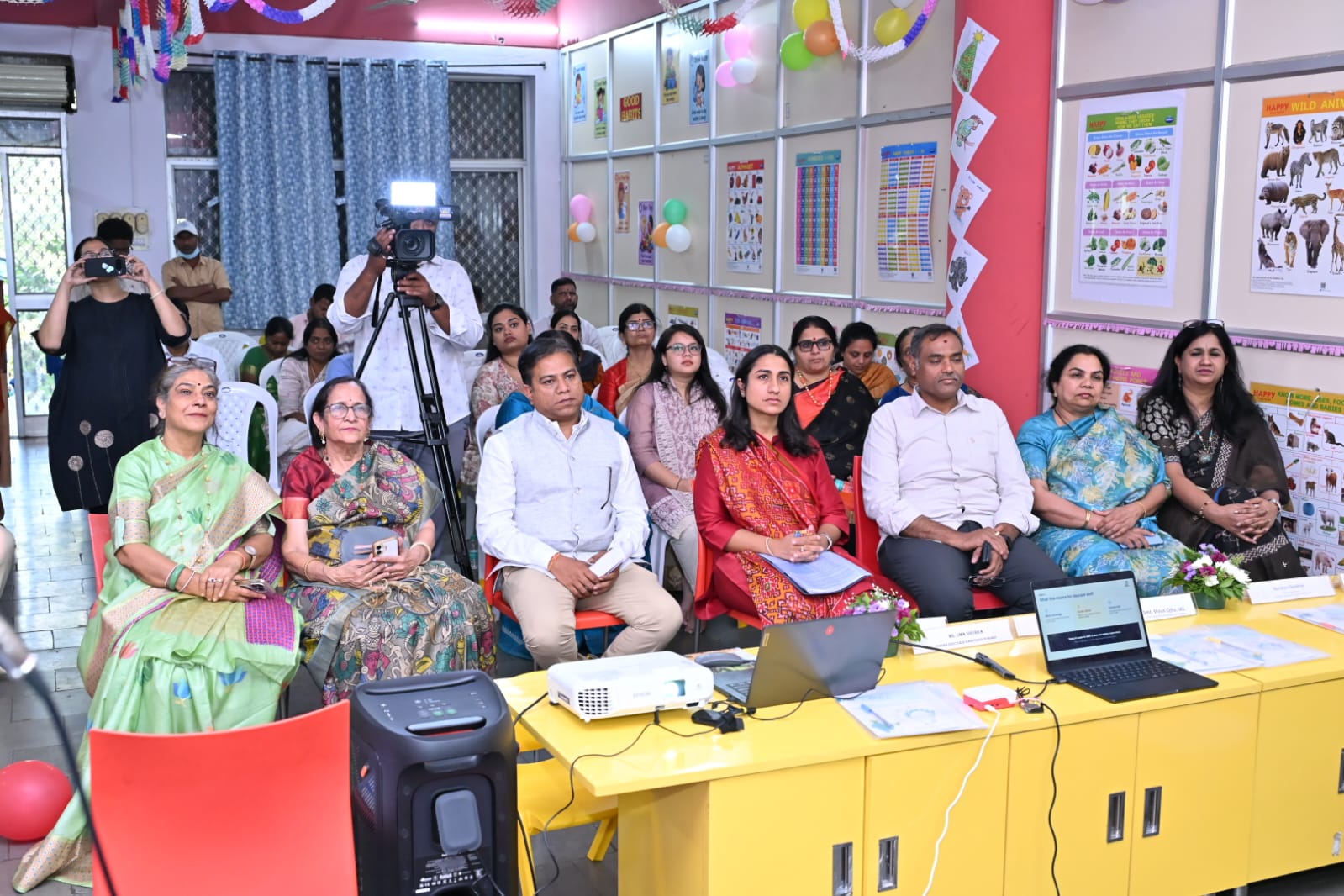
Hyderabad, Nov 15: The Confederation of Women Entrepreneurs of India (COWE INDIA) has partnered with the United Nations Development Programme (UNDP) to develop a self-sustaining, workplace-based childcare model for low-income families.
Under the collaboration, Aveksha day care centres at Pashamailaram and Suraram will serve as pilot centres, with UNDP support. The proposed model will bring together industry associations, corporate CSR contributions and modest parent contributions to ensure long-term financial sustainability.
The collaboration was launched at the Aveksha centre in Pashamailaram in the presence of Smt. Shruti Ojha, IAS, Special Secretary and Director, Women and Child Welfare and Social Welfare, and Managing Director, Women Development Corporation, Telangana, and Mr. Jeya Chandran, Regional Head – Southern India, UNDP. COWE INDIA was represented by its Founder Directors, Ms. Uma Ghurka and Ms. Madhu Tyagi, and National President Ms. Neeraja Reddy. Industry representatives and parents also participated, stated a press note Ms. Uma Gurkha of COWE India, issued in the city today.
Smt. Shruti Ojha appreciated Aveksha’s efforts in providing safe and reliable childcare to working women, describing it as a model that enables mothers to pursue employment with peace of mind. Mr. Jeya Chandran highlighted the partnership between COWE INDIA, UNDP and the Government, and the adoption of technology to strengthen childcare services.
The two pilot centres will explore a shared funding framework in which industry associations support operations, corporate CSR partners contribute resources and parents make modest contributions towards childcare, made possible by the income they earn through employment.
Each centre will provide three nutritious meals a day and early learning education.
Ms. Uma Ghurka, Founder Director, COWE INDIA, said, “A day care centre that depends entirely on grants survives only as long as the grant does. We want to demonstrate that centres serving low-income families can stand on their own feet, with industry, CSR and parents sharing the responsibility. The parent’s contribution is particularly meaningful because the mother is able to earn precisely because Aveksha provides dependable childcare. That is the cycle of empowerment we want to establish.”
A highlight of the launch was Sajag AI, a CCTV-based safety-alert system developed by two Grade 10 students, Shloak Bihani of CHIREC International School, Hyderabad, and Aryaman Taparia of Step By Step School, Noida.
The system monitors existing CCTV feeds and sends SMS and email alerts with incident details and snapshots whenever it detects a potentially unsafe situation. Trained staff review every alert and decide on the appropriate response. Successfully piloted at an Aveksha centre, Sajag AI is proposed to be extended across the network.
Another inspiring contribution came from the DJ Group, comprising children aged 9 to 12 years. Through a Kidspreneur initiative, the young group earned and contributed ₹40,000 towards Aveksha centres. It had earlier donated part of its earnings to the Gudlapochampally centre.
Aveksha, meaning ‘to take care of’, is COWE INDIA‘s day care initiative for children of women industrial workers and underprivileged families. Supported by SIDBI towards operating costs and corporate CSR partners for infrastructure, the network currently operates 18 centres across industrial clusters in Telangana and is expected to cross 20 shortly.
Each centre accommodates 20–30 children from 9 AM to 6 PM, providing free or highly subsidised childcare. The initiative has enabled hundreds of women to take up employment, many of them for the first time.
COWE INDIA plans to replicate the Aveksha model across other parts of India.