

Dubai’s Fintech Expansion: Opportunities for Startups and Financial Technology Providers
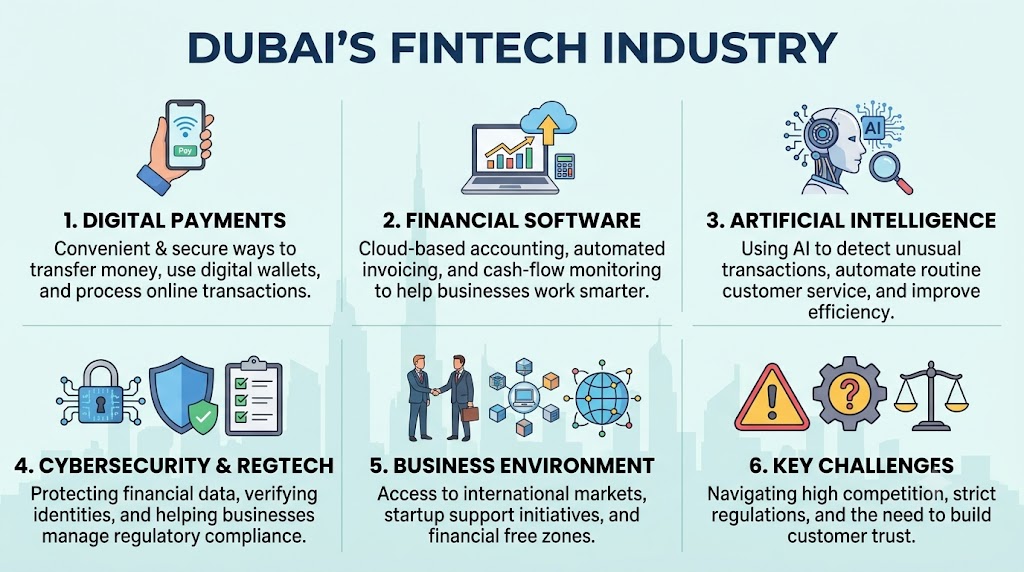
Dubai’s fintech industry is becoming an important part of the city’s economic transformation, creating new opportunities for startups, technology providers and financial service businesses. As consumers and companies increasingly adopt digital financial services, demand is growing for faster payments, accessible financial products, secure transactions and more efficient banking solutions.
The expansion of fintech is also changing how businesses manage money, serve customers and develop new products. From digital payment platforms to automated financial management tools, technology is helping financial services become more convenient and accessible. For businesses entering the market, this shift offers opportunities to address practical challenges while building services for a digitally connected economy.
Digital Payments Create Opportunities for Innovation
Digital payments remain one of the most visible areas of fintech growth. Consumers increasingly expect convenient ways to transfer money, pay bills and complete online purchases, while businesses need payment systems that are reliable, secure and easy to integrate.
This creates opportunities for providers offering payment processing, digital wallets, payment gateways and solutions that connect online and offline transactions. Small businesses can also benefit from tools that simplify billing, track transactions and reduce the administrative burden of managing payments.
As digital commerce expands, businesses that improve payment convenience and reliability can find opportunities across retail, hospitality, e-commerce and professional services.
Financial Software Helps Businesses Work Smarter
Companies are increasingly looking for technology that makes financial management easier. Cloud-based accounting platforms, automated invoicing, cash-flow monitoring and digital lending tools can help businesses manage their finances with greater visibility.
These solutions are particularly relevant to small and medium-sized enterprises, which may not have the resources to maintain large finance teams or invest in complex systems. Affordable software can help them monitor expenses, manage receivables and make better-informed business decisions.
For technology providers, the opportunity lies in developing products that are easy to use, adaptable to local business requirements and capable of integrating with existing financial systems.
Artificial Intelligence Is Changing Financial Services
Artificial intelligence is creating further possibilities across the financial sector. Banks, lenders and financial technology businesses can use AI-supported tools to identify unusual transactions, automate routine customer service, assess certain financial risks and improve operational efficiency.
Automation can reduce repetitive work and allow employees to focus on more complex customer needs. Data analysis can also help businesses understand customer behaviour and design services that better reflect different financial requirements.
However, the use of AI in financial services requires careful oversight. Businesses must consider data privacy, the reliability of automated decisions, cybersecurity and the risk of unfair outcomes. Responsible implementation will be essential to building customer confidence.
Cybersecurity and Regulatory Technology Become Essential
As more financial activity moves online, protecting customer information and financial transactions has become a central business priority. A security incident can lead to financial losses, operational disruption and damage to customer trust.
This creates demand for cybersecurity services, identity verification, fraud detection, secure payment infrastructure and systems that help businesses monitor suspicious activity. Regulatory technology, commonly known as RegTech, also offers opportunities by helping financial firms manage compliance processes, maintain records and monitor relevant obligations.
Businesses operating in the UAE must understand the regulatory requirements applicable to their activities. Depending on the service and business structure, they may need authorisation from the relevant financial regulator. Early attention to licensing, data protection and compliance can help reduce delays and avoid costly operational problems.
Dubai’s Business Environment Supports Fintech Expansion
Dubai’s international business connections, established financial infrastructure and access to regional markets make it an attractive location for companies exploring financial technology opportunities. The wider UAE ecosystem includes financial free zones, startup support initiatives, investor networks and programmes designed to encourage innovation.
These resources can help businesses connect with potential partners, understand market requirements and explore investment opportunities. However, market entry still requires a clear business model, an understanding of local customers and careful planning around licensing and operating costs.
Companies should also recognise that the needs of customers differ across sectors and markets. A payment solution designed for large retailers, for example, may not suit a small business with limited technical resources. Understanding these differences can help businesses develop more relevant products and build stronger customer relationships.
Funding and Partnerships Can Help Startups Scale
Developing a fintech product often requires investment in technology, compliance, skilled employees and customer acquisition. Partnerships with financial institutions, established businesses and technology providers can help startups access expertise, distribution channels and potential customers.
For early-stage companies, partnerships may be just as important as funding. Working with established organisations can provide opportunities to test products, improve service reliability and understand customer expectations before expanding further.
Investors and business partners are likely to examine more than the novelty of a product. Sustainable revenue, customer retention, security standards, regulatory readiness and the ability to scale efficiently are also important considerations.
Challenges Businesses Must Prepare For
Despite the opportunities, fintech is a competitive and highly regulated industry. Companies must balance innovation with security, compliance and customer protection. They also need to demonstrate that their products solve genuine problems rather than simply introduce new technology.
Customer acquisition can be expensive, particularly when competing with established financial service providers. Businesses may also face integration challenges, talent shortages and changing regulatory expectations.
A practical approach is to begin with a clearly defined customer need, test the product on a manageable scale and strengthen its security and compliance arrangements before expanding. This can help businesses use their resources more effectively and build a stronger foundation for long-term growth.
Conclusion
Dubai’s fintech industry is creating opportunities across digital payments, financial software, artificial intelligence, cybersecurity and regulatory technology. As businesses and consumers adopt more digital financial services, demand is likely to favour solutions that combine convenience, security and practical value.
For startups and technology providers, success will depend on understanding the market, meeting regulatory requirements and building services that customers can trust. Companies that focus on genuine business needs and sustainable operations will be better positioned to participate in Dubai’s evolving financial technology economy.