
India’s Creator Economy Enters a New Phase as Non-Metro Creators Become the Majority, Reveals ISB–Hashfame Report
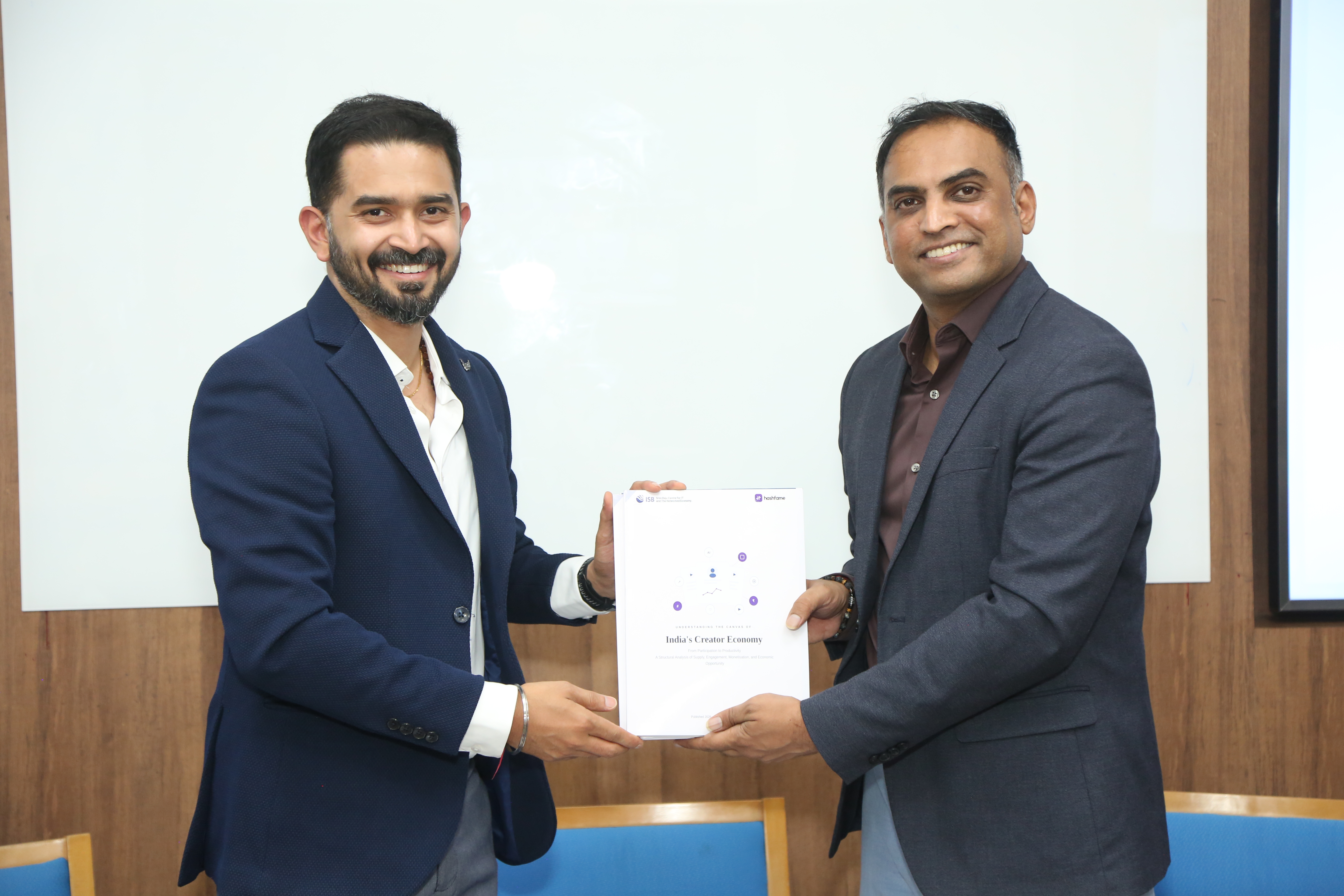
India, July 14: India’s creator economy is entering a new phase of growth. What began as a metro-led digital phenomenon has evolved into a geographically distributed and economically significant ecosystem that is reshaping entrepreneurship, marketing and digital commerce across the country. A new report released by the Srini Raju Centre for IT and the Networked Economy (SRITNE) at the Indian School of Business (ISB) and Hashfame argues that the next phase of India’s creator economy will depend less on expanding participation and more on enabling creators to build sustainable businesses.
Titled Understanding the Canvas of India’s Creator Economy, the report draws on comprehensive data from the Qoruz Creator Intelligence Platform covering creators, brand campaigns and audience engagement between 2020 and 2025 to examine how India’s creator ecosystem has evolved over the past five years. The findings suggest that the creator economy has moved beyond its early growth phase and is becoming an increasingly important part of India’s digital economy.
The findings document rapid expansion across every major dimension of the ecosystem. India’s creator base grew more than fourfold over the past five years, increasing from approximately 0.96 million creators in 2020 to 4.12 million in 2025. Growth has been particularly pronounced outside India’s metropolitan centres. Today, 66% of India’s creators come from non–metro markets, compared with less than half five years ago. Between 2020 and 2025, the number of creators outside metropolitan India grew 6.4 times, compared with 2.6 times in metro markets, reflecting the emergence of entirely new creator ecosystems across regional India, rather than simply a slowing of growth in large cities. Uttar Pradesh and Maharashtra together account for nearly one-quarter of India’s creators, while states such as Tamil Nadu, Karnataka and Gujarat produce disproportionately high numbers of creators relative to their population, underscoring the broad geographic spread of the creator economy.
Remarkably, this expansion has not come at the expense of audience engagement. Even as the creator base quadrupled, average engagement rates increased from 1.8% in 2020 to 7.2% in 2025, suggesting that creators are building stronger audience relationships rather than competing for an increasingly fragmented pool of attention. Brands have increasingly followed this shift. Annual creator campaigns increased from approximately 14,000 to 42,000, while average campaign spending rose 3.6 times, reflecting growing confidence in creator-led marketing as an increasingly mainstream channel for customer acquisition and engagement.
The report also points to an important structural challenge. While participation has expanded dramatically, earning opportunities remain concentrated. The number of non–metro creators participating in brand campaigns increased from around 38,000 to more than 408,000 during the study period. Yet, most creators still undertake only a single paid campaign annually. The findings suggest that the next stage of growth will depend less on expanding participation and more on improving creator productivity by enabling repeat brand collaborations, diversified revenue streams and more sustainable businesses.
Language is emerging as another important driver of this transformation. Although Hindi creators account for 42% of India’s creator base, creators producing content in Telugu, Tamil, Kannada, Marathi, Bengali, Malayalam, Gujarati, Bhojpuri and other regional languages collectively account for the majority of creators. The report identifies several language ecosystems where creator participation has outpaced brand investment, highlighting significant opportunities for businesses seeking deeper engagement with regional audiences.
Madhu Viswanathan, Associate Professor of Marketing and Executive Director, SRITNE at ISB, said: “India’s creator economy is no longer defined by whether people can become creators. That transition is already underway. The more important challenge now is enabling creators to build sustainable businesses. Our findings suggest that the next phase of growth will depend on improving creator productivity, strengthening creator-brand relationships and creating more durable economic opportunities for creators across India. We hope this report provides an evidence-based foundation for that conversation.”
Anirudh Sridharan, Co-Founder and Head of Product at Hashfame, said: “Creators are becoming an integral part of how brands reach consumers across India. As the ecosystem expands beyond metropolitan markets, businesses increasingly need to think beyond one-off influencer campaigns and build long-term partnerships with creators who have earned trust within their communities. The opportunity now lies not simply in discovering more creators, but in helping them build sustainable businesses.”
The report concludes that India’s creator economy has reached an important inflection point. As participation becomes increasingly widespread across regions and languages, the next phase of growth will depend on improving the quality of economic opportunities available to creators. For brands, this means investing in longer-term creator relationships rather than transactional campaigns. For platforms, it means improving discovery and monetisation opportunities across underserved language markets. For policymakers, it means recognising creators as an increasingly important part of India’s digital entrepreneurship ecosystem and ensuring that they have access to the institutions and support available to other self-employed professionals and MSMEs.
As India’s creator economy becomes an increasingly important source of entrepreneurship, employment and digital economic activity, enabling creators to build sustainable businesses will be central to the ecosystem’s continued growth.
The report is based on primary data from the Qoruz Creator Intelligence Platform, comprising creator and brand campaign data from 2020 to 2025, and secondary data from the Centre for Monitoring Indian Economy (CMIE) Consumer Pyramids Household Survey (May–June 2025; ~174,000 accepted household records), the Periodic Labour Force Survey (PLFS 2023–24 Q4), BSNL 4G District Coverage data, and the Census of India.