

First in Noida: Fortis Hospital Noida introduces Minimally Invasive VABB Technique for Scar-Minimal Removal of Benign Breast Lumps
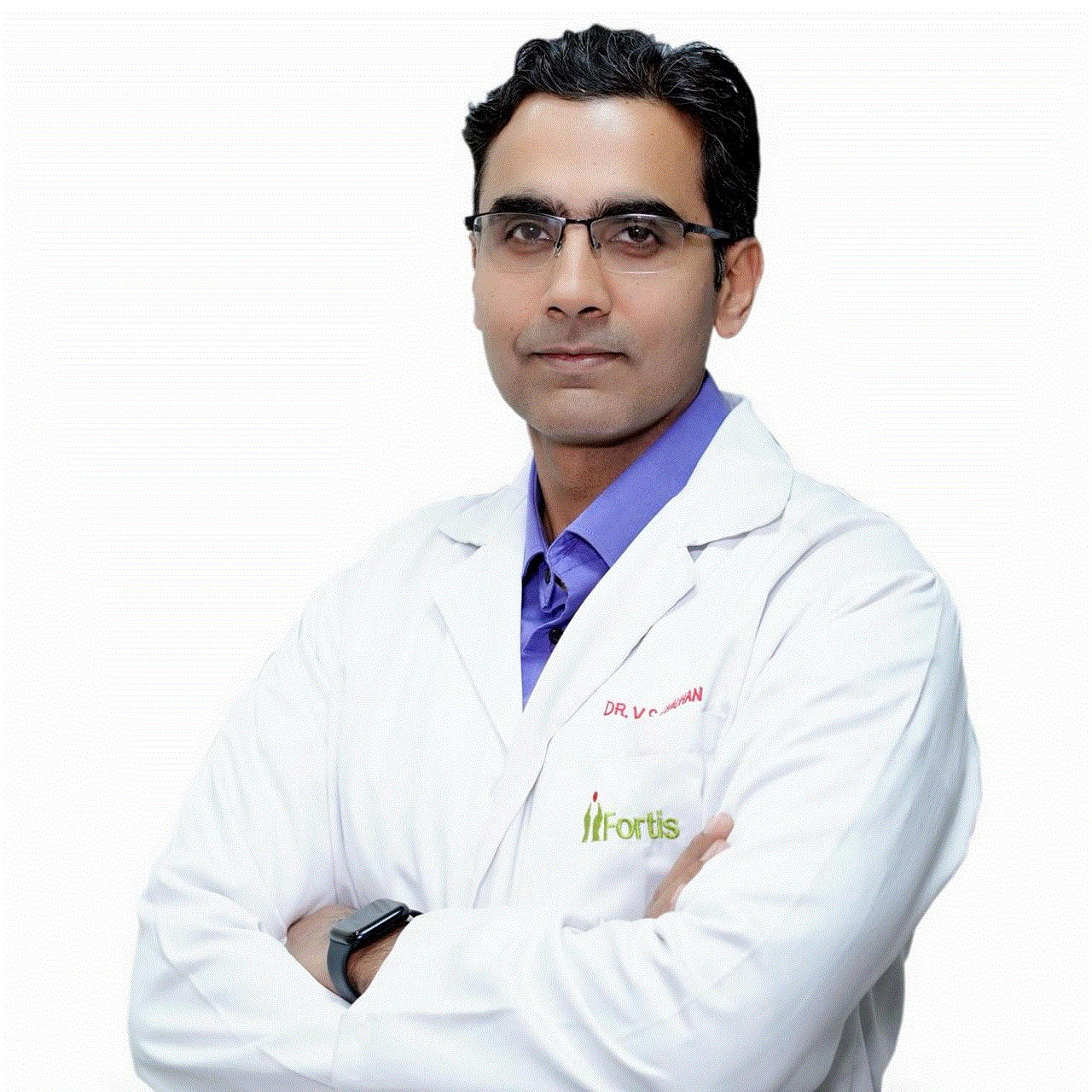
Noida, June 23: Fortis Hospital Noida has introduced Vacuum-Assisted Breast Biopsy (VABB), an advanced minimally invasive technology that enables the accurate diagnosis and removal of selected benign breast lumps with minimal scarring, reduced pain, and faster recovery. Strengthening access to advanced breast care in the region, the hospital recently successfully treated a 49-year-old woman suffering from a painful breast lump through the procedure. The team of doctors led by Dr V S Chauhan, Director, General Surgery, Fortis Noida successfully performed the procedure, and the patient was discharged in a stable condition within a day.
The patient had been living with a breast lump for nearly two years and had been experiencing intermittent pain and discomfort. The lump was initially detected during a routine self-breast examination, following which she sought medical consultation due to concerns about the possibility of breast cancer.
Following a detailed clinical evaluation at Fortis Hospital Noida, doctors identified a small lump in the lower outer area of her right breast.Further investigations, including bilateral breast ultrasound and Fine Needle Aspiration Cytology confirmed the lump to be benign with no suspicious radiological features. Considering the patient’s age, the size and location of the lump, and the benign nature of the condition, doctors recommended a minimally invasive VABB procedure as an effective treatment option.
The procedure was performed under general anesthesia in a day-care setting. Using real-time image guidance, doctors made a tiny 3-4 mm incision and inserted a vacuum-assisted device to accurately target and completely remove the lesion. The surgery lasted approximately 15 minutes and was completed successfully without complications or significant blood loss. The patient required no stitches and was discharged the following day in stable condition. Histopathological examination later confirmed the lump to be benign fibroadenoma, consistent with the initial imaging findings. The patient recovered well post-procedure and was able to resume normal activities within a short period.
Giving details of the case, Dr V S Chauhan, Director, General Surgery, Fortis Hospital Noida said, “Breast lumps are a major source of anxiety for many women, primarily due to the fear of cancer. However, not all breast lumps are malignant. Advanced minimally invasive procedures like VABB allowed us to diagnose and treat selected benign breast lesions effectively with minimal pain, almost invisible scars, and faster recovery. In this case, the patient benefitted immensely from early diagnosis and timely intervention, which helped avoid a larger surgery that may have been required if the lump had increased in size over time. VABB is an advanced technology currently available at limited centres in India and offers excellent cosmetic outcomes compared to conventional open surgery. The procedure is especially beneficial for patients looking for a safe, effective, and minimally invasive alternative for managing benign breast conditions.”
Mr. Mohit Singh, Zonal Director, Fortis Hospital Noida said, “At Fortis Hospital Noida, we remain committed to bringing advanced, patient-centric healthcare solutions that ensure better clinical outcomes with minimal physical and emotional discomfort. The successful use of VABB in this case reflects our focus on adopting cutting-edge minimally invasive technologies that not only provide effective treatment but also enhance patient comfort, faster recovery, and superior cosmetic outcomes. We encourage women to prioritise regular self-breast examinations and seek timely medical consultation for any unusual changes, as early detection and intervention can make a significant difference in treatment outcomes.”