
How Millennials Are Reshaping the Future of Home Buying in India
India’s housing market is undergoing a profound generational transformation, with Millennials emerging as one of the most influential home-buying cohorts in urban India. Once perceived as a generation inclined towards renting, flexibility, and experience-led living, Millennials are now driving a decisive shift towards ownership; reshaping not only demand patterns but also how homes are designed, marketed, and delivered.
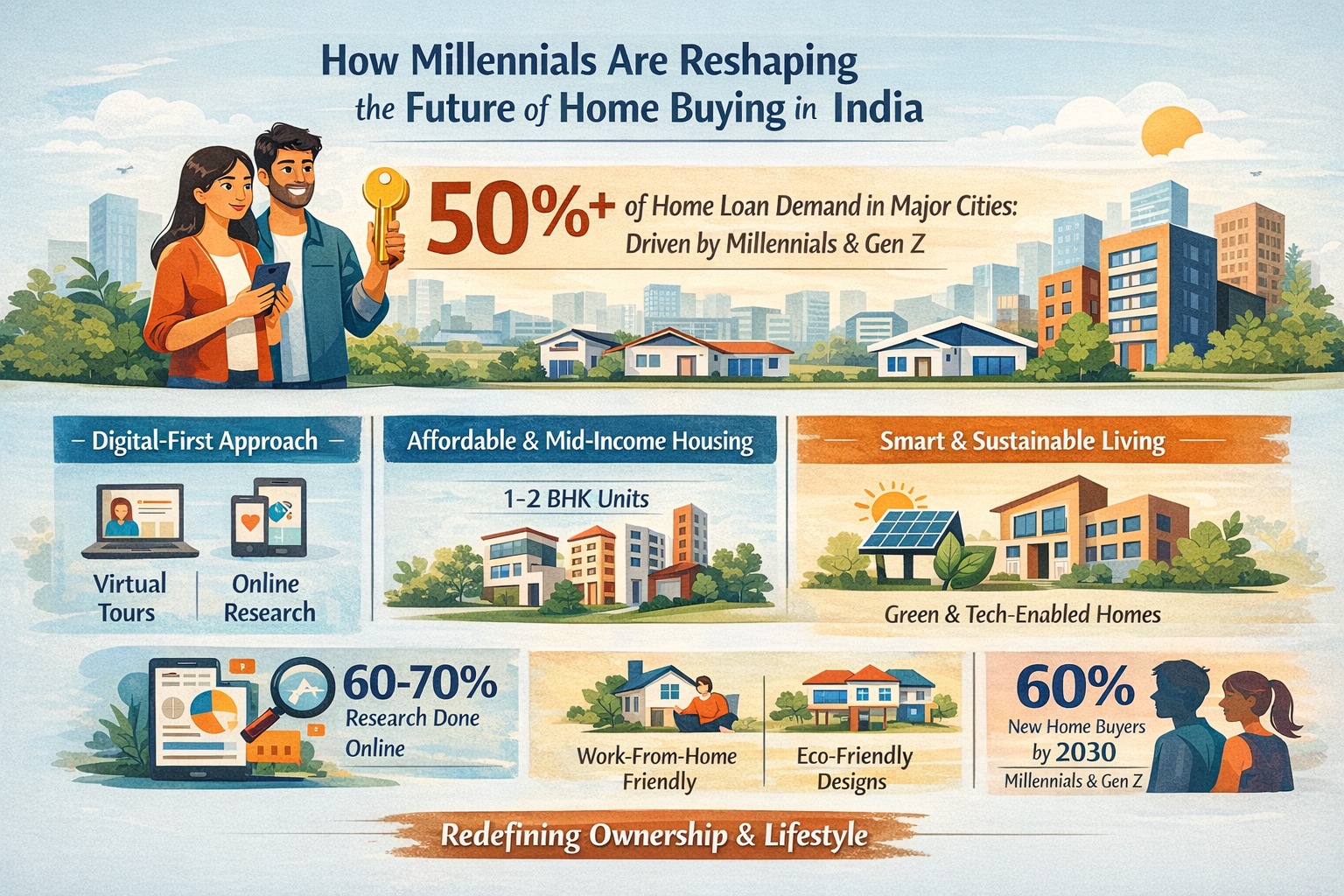
Over the past few years, the share of first-time homebuyers in their late 20s and early 30s has increased significantly. Post-pandemic priorities, improved income stability, hybrid work models, and the desire for long-term security have accelerated this transition. Industry data reflects this change clearly. According to real estate platforms, Millennials and Gen Z together now account for over 50% of total home-loan demand across key Indian cities, making them the single largest force behind mortgage activity. A substantial portion of this demand is concentrated in affordable and mid-income housing, particularly in Tier-I urban markets such as Mumbai, Bengaluru, and NCR.
Mr. Jayesh Rathod, Co-Founder & Director, The Guardians Real Estate Advisory, says, “Millennials are displaying unprecedented confidence in property ownership. They are clear about what they want; flexible layouts, smart-home features, and wellness-centric spaces, and this clarity is pushing developers to rethink traditional design approaches.”
Equally significant is the digital-first approach Millennials bring to the home-buying journey. Research today begins well before any physical site visit, with buyers extensively comparing projects, tracking price benchmarks, analyzing neighborhood infrastructure, viewing virtual walkthroughs, and assessing long-term value appreciation. Industry surveys indicate that younger buyers now spend nearly 60–70% of their decision-making phase online, fundamentally altering how residential real estate is marketed and sold.
Ms. Shraddha Kedia-Agarwal, Director, Transcon Developers, says, “By the time Millennials walk into a sales office, they already have a deep understanding of the project, pricing benchmarks, and location dynamics. This level of preparedness has compelled developers to improve transparency, adopt advanced digital tools, and deliver faster, data-backed communication throughout the buying journey. Millennials are defining a new value system in real estate and developers who understand this mindset will lead the next growth cycle.”
Building on this heightened awareness and digital maturity, Millennials are also bringing a strong sense of practicality to their home-buying decisions. Beyond location and price intelligence, they are prioritizing homes that align with evolving lifestyles; supporting work-from-home needs, nuclear family living, and long-term adaptability. Reflecting this trend, market data shows that one- and two-bedroom configurations now account for over half of total residential demand, highlighting the preference for efficient, well-planned spaces over sheer size.
Echoing this shift, Mr. Dhruman Shah, Promoter, Ariha Group, notes, “Millennials want future-proof homes. They focus on efficient layouts, usable space, and long-term functionality rather than just grand interiors. They question specifications, material quality, and maintenance before committing.”
Technology has thus moved from being a differentiator to a baseline expectation. Smart access controls, energy-efficient systems, app-enabled property management, and integrated security solutions are now standard asks among younger buyers.
Sustainability has also emerged as a defining priority. Demand for green-certified housing featuring solar power, efficient water management, improved ventilation, and eco-friendly materials has risen steadily, particularly in mid and premium segments. Industry reports suggest that green-certified residential developments could account for nearly 30% of new launches in the coming years, driven largely by Millennial demand for homes that reduce long-term operating costs and support healthier living environments.
Rathod adds, “Sustainability has moved firmly into the mainstream. Millennials increasingly prefer homes that reduce long-term costs, support overall well-being, and create a positive environmental impact.”
For Millennials, a home is no longer viewed merely as a financial asset; it is an extension of identity and lifestyle. Functionality, community engagement, wellness amenities, and aesthetics carry as much weight as location and price.
This evolving preference has strengthened the appeal of integrated townships, transit-oriented developments, and premium mid-income housing that blend convenience with community living. Looking ahead, leading real estate consultancies estimate that Millennials and Gen Z will comprise nearly 60% of all new homebuyers by 2030, making them the most influential demographic shaping future residential products in India.
Despite their reputation for mobility, Millennials are increasingly choosing ownership amid rising rental costs, favourable home-loan conditions, and greater confidence in long-term urban employment prospects. With residential sales among the strongest seen in over a decade, younger buyers are clearly driving market momentum.
As Millennials take centre stage, India’s housing sector is undergoing a fundamental structural shift. Sustainability, intelligent design, digital integration, and community-centric living have emerged as the new benchmarks; redefining value, reshaping residential offerings, and setting the direction for the next phase of growth in the country’s real estate landscape.